
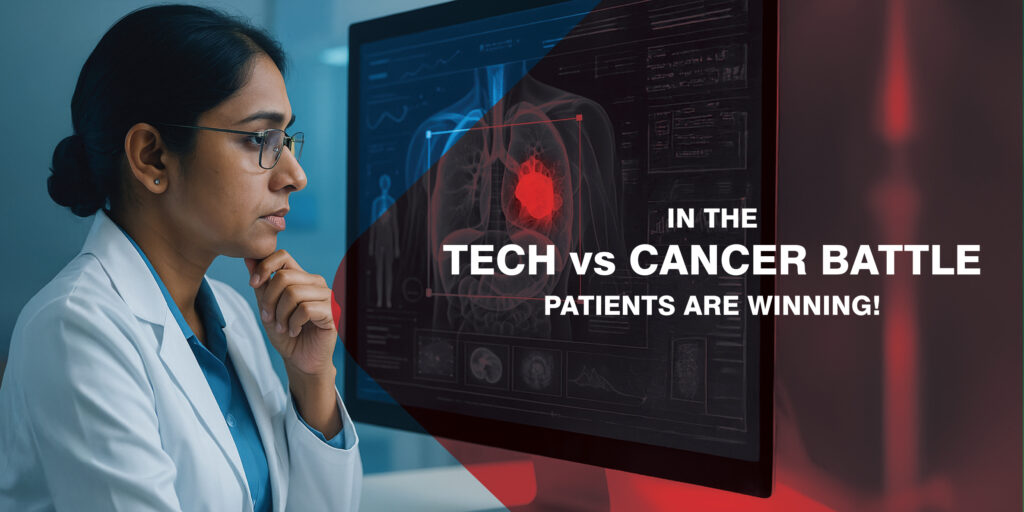
The landscape of cancer treatment has entered a new era. Innovations in artificial intelligence, cellular therapies, and surgical robotics are fundamentally reshaping how oncologists diagnose, treat, and monitor cancer patients. What distinguishes this moment is that these breakthroughs are moving beyond research laboratories into clinical practice, with measurable outcomes improving survival rates and patient
experience.
Early detection gets smarter with AI
Artificial intelligence is helping doctors spot cancers earlier and with greater accuracy. AI algorithms can read imaging, flag suspicious lesions and prioritise cases so radiologists and pathologists focus where they matter most. Reviews of recent work show AI improving diagnostic workflows, speeding up triage and helping predict which tumours will respond to particular treatments. This reduces delays and helps clinicians start the right therapy sooner.
Precision therapies move from labs to clinics
Targeted medicines and immunotherapies (including CAR-T) are turning once- intractable cancers into treatable diseases. India has made a major stride with the approval and rollout of the first homegrown CAR-T product, improving local access to cutting-edge cellular therapies and lowering cost barriers that kept these options out of reach for many patients. As more centres gain experience, these therapies will become an important option for suitable patients across the country.
Robotic surgery: Precision with smaller footprints
Robotic-assisted surgery is now widely used for complex cancer operations — from head and neck tumours to pelvic and pancreatic procedures. The robotic platform magnifies the surgical field and translates a surgeon’s movements into ultra-precise instrument actions, helping preserve healthy tissue and speed recovery. More and more hospitals are harnessing the power of robotics to perform complicated surgeries.
Local innovations and health-system scale-up
The Indian Government is piloting AI-based cancer screening to improve early detection of oral, breast and cervical cancers — a sign that public health systems are ready to adopt digital tools at scale. When government programs, hospitals and technology partners work together, screening coverage widens and diagnostic bottlenecks fall. This is the pathway to shifting outcomes at a population level — not just for a handful of patients.
What this means for patients
Practically, these innovations translate into fewer invasive biopsies, shorter hospital stays, more personalised drug choices and earlier treatment starts. For patients this can mean less time away from family and work, fewer side effects and better long-term results. Clinical teams still make the key decisions, but technology gives them clearer, faster evidence to act on.
The age of informed decisions
The conversation between patient and care team becomes more powerful with these tools. Patients can ask informed questions: Has my imaging been reviewed by both radiologist and AI algorithm? Am I a candidate for minimally invasive surgery? Do any clinical trials match my cancer type and stage? What does precision medicine mean for my specific tumor’s biology?
Incremental steps, big impact
Innovation in cancer care is not a single breakthrough but many steady advances — smarter detection, targeted drugs, cellular therapies and robot-assisted surgery — all combining to improve outcomes.