

Quick Summary
Gallstones are hardened deposits that form inside the gallbladder. Some people may have gallstones without any symptoms, while others experience repeated upper abdominal pain, nausea, vomiting or digestive discomfort. Treatment depends on whether the stones are causing symptoms or complications. If you have recurrent gallstone symptoms, consulting a specialist at a gastroenterology hospital in Hyderabad can help determine whether monitoring, medical management or gallbladder surgery is appropriate.

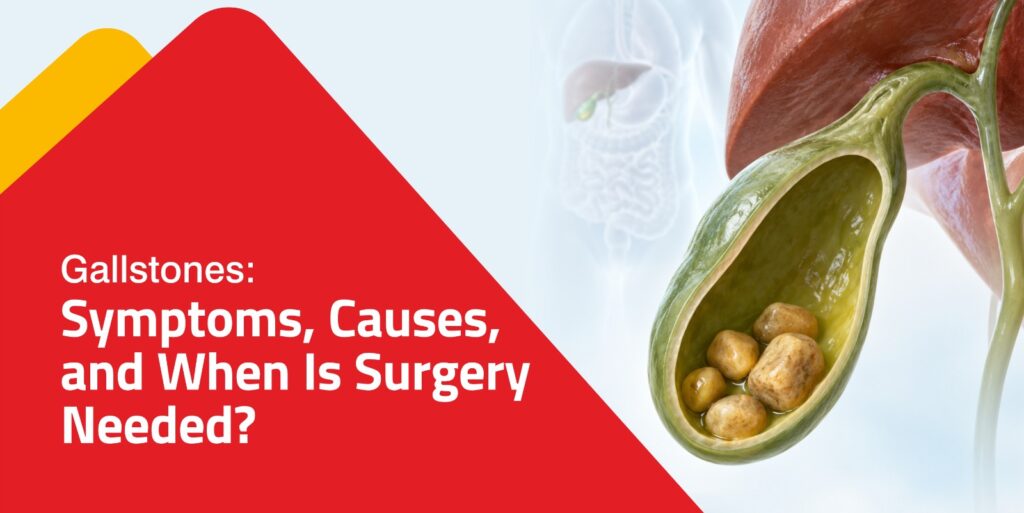
The gallbladder is a small organ located below the liver that stores bile, a digestive fluid that helps the body digest fats.
Gallstones develop when substances in bile form hardened deposits inside the gallbladder. They can vary considerably in size and number.
Many people with gallstones never experience symptoms. Problems generally arise when a stone blocks the normal flow of bile.
What Are the Common Symptoms of Gallstones?
Gallstones may cause sudden pain, particularly when a stone temporarily blocks a bile duct.
Common symptoms can include:
- Pain in the upper right side of the abdomen
- Pain in the upper middle abdomen
- Pain that may spread towards the back or right shoulder
- Nausea or vomiting
- Abdominal discomfort after meals
- Recurrent episodes of similar pain
The intensity and duration of symptoms can vary from person to person.
What Causes Gallstones?
Gallstones can form when the normal composition or movement of bile changes.
Factors that may increase the likelihood of gallstones include:
- Being overweight or obese
- Rapid weight loss
- Pregnancy
- Increasing age
- Family history of gallstones
- Certain medical conditions
- Changes in how the gallbladder empties
Having one or more risk factors does not necessarily mean you will develop gallstones.
Can Gallstones Exist Without Symptoms?
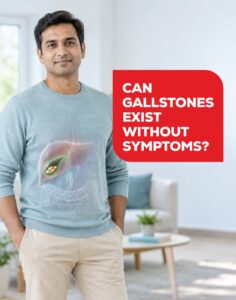
Yes.
Some gallstones are discovered accidentally during an ultrasound or another investigation performed for a different reason. These are sometimes called silent gallstones.
Gallstones that are not causing symptoms may not always require surgery. Your doctor will assess your individual condition and recommend whether observation or treatment is appropriate.
What Does Gallstone Pain Feel Like?
Gallstone pain can sometimes be mistaken for acidity, gas or indigestion.
A typical episode may involve significant pain in the upper right or upper central abdomen. The pain can sometimes extend towards the back or shoulder and may be accompanied by nausea or vomiting.
If abdominal pain keeps returning, particularly after meals, it is important to have the cause evaluated rather than repeatedly treating it as acidity.
How Are Gallstones Diagnosed?
Your doctor will first discuss your symptoms and medical history and perform an examination.
Tests may include:
- Abdominal ultrasound
- Blood tests
- Liver function tests
- Other imaging tests when required
An ultrasound is commonly used to identify gallstones and assess the gallbladder.
Do All Gallstones Need Surgery?
No.
The presence of gallstones alone does not automatically mean surgery is required.
If gallstones are discovered incidentally and are not causing problems, your doctor may recommend monitoring them.
However, surgery may be considered when gallstones repeatedly cause symptoms or lead to complications.

When Is Gallbladder Surgery Needed?
Your surgeon may recommend gallbladder removal when gallstones are causing:
- Repeated episodes of significant abdominal pain
- Gallbladder inflammation
- Infection
- Blockage of the bile ducts
- Jaundice related to stones
- Pancreatitis caused by gallstones
- Other gallstone-related complications
The decision is based on your symptoms, investigations and overall health.
What Is Laparoscopic Gallbladder Surgery?
Gallbladder removal is known as a cholecystectomy.
In many patients, this can be performed using laparoscopic surgery, where the surgeon operates through small incisions in the abdomen.
Compared with traditional open surgery, laparoscopic surgery offers benefits such as:
- Smaller incisions
- Less postoperative discomfort
- Shorter hospital stay
- Faster return to routine activities
- Smaller scars
The appropriate surgical approach depends on the patient’s condition and the surgeon’s assessment.
Can You Live Normally Without a Gallbladder?
Yes. Most people can live normally without a gallbladder.
The liver continues to produce bile after surgery. Instead of being stored in the gallbladder, bile flows directly into the intestine.
Some people may experience temporary digestive changes following surgery, and your doctor can advise you about diet and recovery.
Can Diet Remove Gallstones?
Dietary changes may help reduce digestive discomfort in some people, but diet cannot reliably remove existing gallstones.
If you have symptomatic gallstones, avoiding medical evaluation and relying only on home remedies may delay appropriate treatment.
Your doctor or dietitian may recommend dietary modifications based on your symptoms and overall health.
When Should Gallstone Symptoms Be Treated as an Emergency?
Seek urgent medical attention if abdominal pain is severe or persistent, particularly when accompanied by:
- Fever or chills
- Persistent vomiting
- Yellowing of the skin or eyes
- Severe abdominal tenderness
- Dark urine
- Significant weakness or illness
These symptoms may indicate a gallstone-related complication requiring prompt treatment.
Why Choosing the Right Hospital for Gallstone Treatment Matters?
Choosing an experienced gastroenterology and laparoscopic surgery hospital in Hyderabad can help ensure proper diagnosis and appropriate treatment.
Patients benefit from:
- Gastroenterology evaluation
- Experienced general and laparoscopic surgeons
- Ultrasound and diagnostic imaging
- Laboratory support
- Minimally invasive surgical options where appropriate
- Emergency and critical care support
- Postoperative monitoring and follow-up
A multidisciplinary approach can be particularly important when gallstones affect the bile ducts, pancreas or other parts of the digestive system.
Frequently Asked Questions
Can gallstones go away on their own?
Gallstones generally do not simply disappear on their own. Whether treatment is needed depends mainly on symptoms and complications.
Is every gallstone patient advised surgery?
No. Asymptomatic gallstones may not always require surgery. Treatment should be individualised.
Can gallstones cause acidity or gas?
Gallstone symptoms can sometimes resemble indigestion, but recurring or significant upper abdominal pain should be medically evaluated.
Is laparoscopic surgery commonly used for gallstones?
Yes. Laparoscopic gallbladder removal is commonly performed in suitable patients with symptomatic gallstones.
Can gallstones come back after gallbladder removal?
No. Once the gallbladder is removed, gallstones cannot re-form.
Conclusion
Gallstones do not always cause problems, but recurring upper abdominal pain, nausea or other symptoms should not be ignored. Early evaluation can help determine whether your symptoms are due to gallstones and whether treatment or surgery is necessary.
At BBR Superspeciality Hospital, our Gastroenterology, General Surgery and Laparoscopic Surgery teams provide evaluation and treatment for gallbladder and digestive conditions. If you are experiencing recurring abdominal pain or have already been diagnosed with gallstones, timely specialist evaluation can help you understand the right next step.