

Quick Summary:
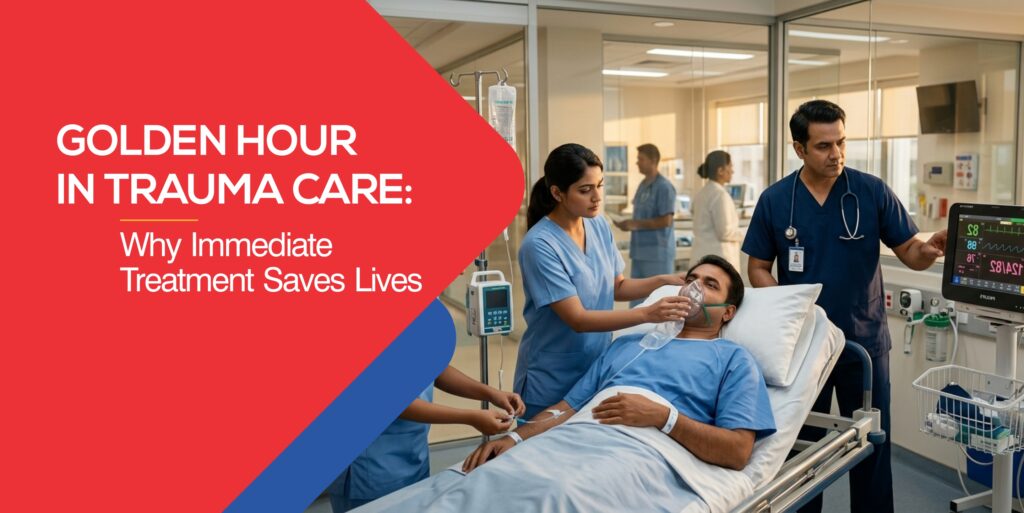
The golden hour in trauma care refers to the first 60 minutes after a serious injury when prompt medical treatment can significantly improve chances for survival and reduce serious complications. Rapid diagnosis, immediate stabilization, and expert care during this critical window often determine whether a patient recovers fully or develops life-threatening complications.
What Is the Golden Hour in Trauma Care?
The golden hour is the crucial first hour after a traumatic injury—such as a road accident, fall, or severe head injury—when medical intervention has the greatest impact on survival. During this time, prompt assessment and treatment can prevent complications like severe bleeding, brain damage, or organ failure.
Trauma injuries often affect multiple parts of the body simultaneously. Quick coordination between emergency physicians and specialists such as orthopedic surgeons, neurosurgeons, general surgeons, and vascular surgeons helps stabilize the patient and prevent further damage.
Why the First Hour Is So Critical
When a serious injury occurs, the body may begin to experience:
- Severe internal or external bleeding
- Reduced oxygen supply to vital organs
- Brain swelling after head trauma
- Damage to major blood vessels or organs
If these conditions are not treated quickly, the risk of complications rises swiftly. Emergency medical care within the golden hour can dramatically improve outcomes.
What Happens During the Golden Hour?
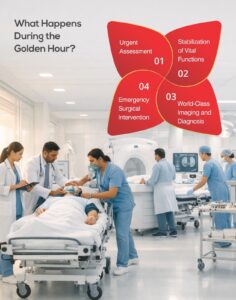
Emergency trauma teams follow a systematic approach to evaluate and treat patients quickly and efficiently.
1. Urgent Assessment
The first step is assessing the patient’s condition using the ABC approach:
- Airway: Ensuring the airway is clear
- Breathing: Checking oxygen levels and lung function
- Circulation: Controlling bleeding and maintaining blood flow
2. Stabilization of Vital Functions
Doctors and emergency staff work quickly to stabilize the patient by:
- Stopping severe bleeding
- Providing oxygen support
- Administering fluids or blood transfusions
- Immobilizing fractures or spinal injuries
3. World-Class Imaging and Diagnosis
Advanced imaging such as CT scans, X-rays, and ultrasounds help doctors detect hidden injuries, including internal bleeding or organ damage.
4. Emergency Surgical Intervention
If necessary, surgeons may perform urgent procedures to treat:
- Brain injuries
- Internal bleeding
- Fractures or dislocations
- Abdominal trauma
Fast decision-making during this stage can significantly influence both survival and long-term recovery.
Real-Life Example: How the Golden Hour Saves Lives
Consider a person involved in a road traffic accident who suffers a head injury and a fractured leg.
If the patient reaches a trauma center quickly:
- Doctors can control bleeding quickly.
- A neurosurgeon can evaluate and treat potential brain swelling.
- An orthopedic surgeon can stabilize the fracture.
- Oxygen and fluids can prevent shock.
However, if treatment is delayed for several hours, the patient may develop complications such as severe blood loss, brain damage, or infection.
This example highlights how timely medical attention during the golden hour can mean the difference between recovery and life-threatening complications.
Common Injuries That Require Immediate Trauma Care
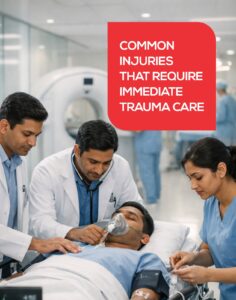
Certain injuries require urgent evaluation because they can quickly become life-threatening.
Head and Brain Injuries
Even a seemingly minor head injury can cause serious problems such as concussion, brain bleeding, or Traumatic Brain Injury (TBI).
Warning signs include:
- Persistent headache
- Vomiting
- Confusion
- Loss of consciousness
Severe Fractures
Complex fractures, especially those caused by accidents, can lead to severe pain, nerve damage, or blood loss if untreated.
Abdominal Injuries
Blunt trauma to the abdomen may cause internal bleeding or organ damage, which is not always visible.
Vascular Injuries
Damage to major blood vessels can result in fast blood loss, making urgent treatment essential.
How Trauma Centers Improve Survival Rates
Modern trauma centers are designed to handle emergencies quickly by bringing together multiple specialists and advanced technology in one place.
Multidisciplinary Trauma Teams
A coordinated team may include:
- Emergency physicians
- Orthopedic surgeons
- Neurosurgeons
- General surgeons
- Plastic and reconstructive surgeons
- Vascular specialists
Advanced Diagnostic Technology
Best-in-class imaging and monitoring tools help doctors identify injuries that may not be visible externally.
On-Demand Surgical Facilities
Having operating rooms ready for emergency procedures ensures that life-saving surgeries can be performed without delay.
What You Should Do During a Trauma Emergency
Knowing how to respond in an emergency can help save lives.
Call Emergency Services Promptly
Never ignore serious injuries or delay medical help after an accident.
Avoid Moving the Injured Person
Unless there is a life-threatening risk, moving someone with a potential spinal or head injury can worsen their condition.
Control Bleeding if Possible
Apply firm pressure with a clean cloth or bandage to help slow bleeding until medical help arrives.
Key Takeaways About the Golden Hour
- The first 60 minutes after trauma are critical for survival.
- Quick medical treatment can prevent complications such as internal bleeding or brain damage.
- Trauma centers use specialized teams and advanced technology to provide expert care.
- Early diagnosis and treatment significantly improve recovery outcomes.
Conclusion
The golden hour in trauma care plays a crucial role in saving lives and reducing long-term complications after serious injuries. Prompt medical attention, urgent diagnosis, and coordinated treatment by specialized doctors can make a significant difference in patient outcomes. Whether it involves head injuries, fractures, internal bleeding, or multiple trauma conditions, timely care ensures the best chances of recovery.
At BBR Super Speciality Hospital, patients have easy access to comprehensive trauma care supported by experienced specialists, advanced diagnostic technology, and emergency services. With a multidisciplinary team that includes orthopedic surgeons, neurosurgeons, general surgeons, and other specialists, the hospital is equipped to manage complex trauma cases effectively and provide the critical care patients need during the golden hour, when every second is crucial.